
veer mhaskoba
Maharashtra is known for its rich cultural heritage, traditional festivals, and strong connection between faith and community life. While cities celebrate many modern events, rural Maharashtra continues to preserve traditions that bring generations together. The Shreenath Veer Mhaskoba Yatra is one such celebration, offering a glimpse into the devotional life and cultural identity of the region.
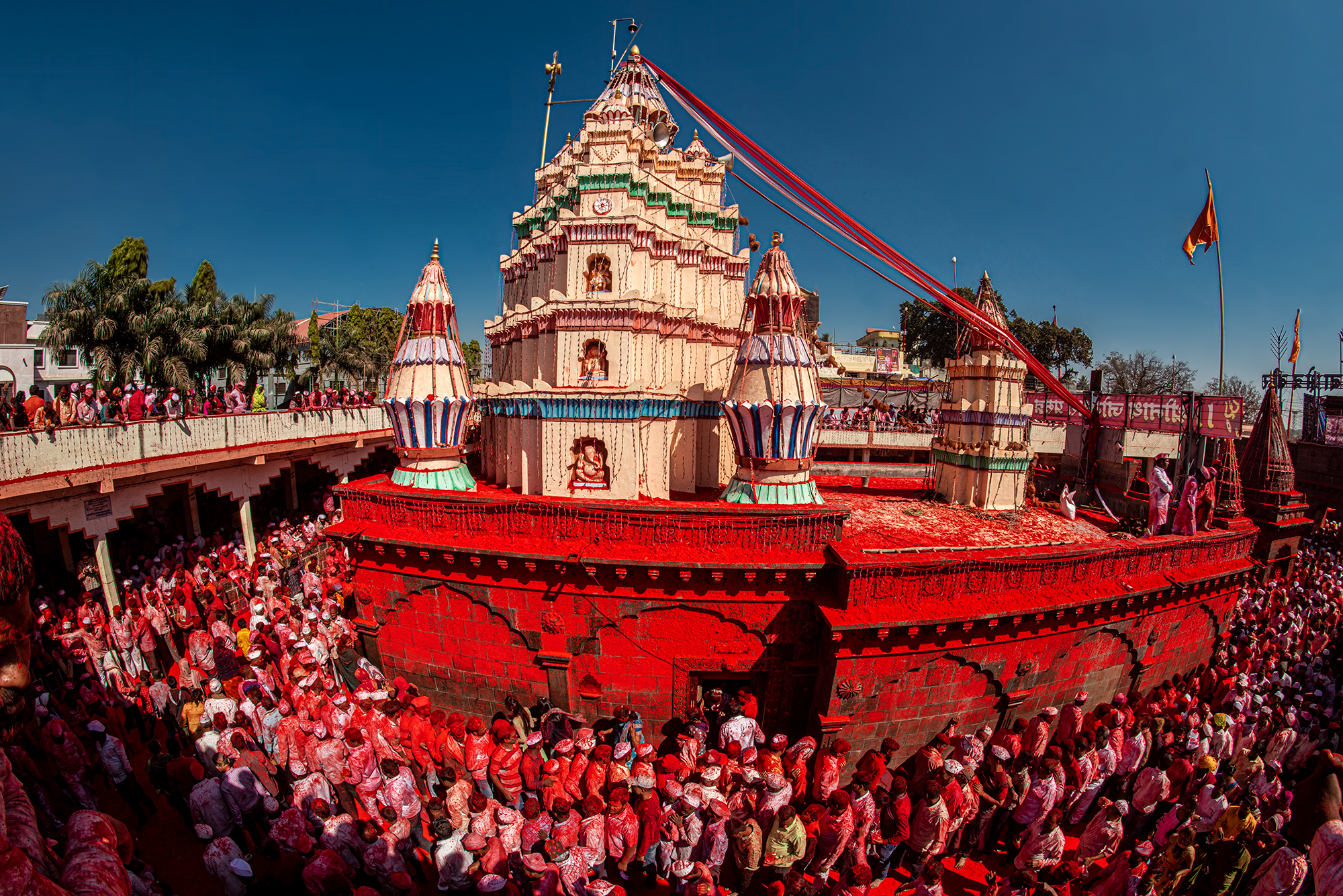
Held in Veer village near Pune, this annual pilgrimage brings devotees together at the temple of Shreenath Mhaskoba Maharaj. The festival is recognised for its palkhi processions, saffron flags, decorated bullock carts, traditional music, and clouds of red gulal that fill the temple surroundings.
For travellers and photographers, the Yatra offers more than colourful scenes. It provides an opportunity to observe local traditions, understand the importance of devotion in rural communities, and document moments that reflect Maharashtra’s living cultural heritage.
Whether you are interested in cultural travel, documentary photography, or traditional Indian festivals, the Shreenath Veer Mhaskoba Yatra offers a memorable way to experience the spirit of rural Maharashtra.
History and Cultural Significance of Mhaskoba Maharaj
The Shreenath Veer Mhaskoba Yatra is a significant religious celebration in Veer, Maharashtra. Devotees gather to honour Mhaskoba Maharaj through prayers, traditional rituals, and community celebrations.
Celebrated around Magh Poornima, usually in February, the Yatra is known for its palkhi processions, saffron flags, traditional music, and vibrant scenes of red gulal. These traditions reflect the deep faith and cultural heritage of the local community.
Through Arun Saha Photography, the Shreenath Veer Mhaskoba Yatra is captured through the real moments of the festival, from the devotion of the people to the traditional rituals and vibrant celebrations that reflect the rich cultural heritage of rural Maharashtra.
veer
Veer Village: A Window into Rural Maharashtra
Veer village is located in Purandar taluka, approximately 50 kilometres from Pune. The official tour page places the village near the Purnaganga River, with the historic Purandar Fort visible in the surrounding landscape. These geographical features form part of the setting in which the annual festival takes place.
The rural environment adds a distinctive character to the celebration. Unlike a festival organised within a modern city venue, the Yatra unfolds around a village temple and its surrounding spaces. Devotees, local residents, and visitors become part of the same gathering.
During the festival, village streets and temple surroundings become busy with arriving groups, palkhis, flags, and traditional activities. The usual pace of daily life changes as people come together for worship and celebration.
For photographers, this setting provides opportunities to tell a broader story. The festival itself is important, but so are the details around it: the village landscape, the movement of people through narrow streets, the preparation of processions, and the quiet moments between major events.
These scenes help show how rural festivals remain connected to the everyday lives and cultural identity of local communities.
Festival Rituals, Devotees, and Palkhi Processions
One of the most striking aspects of the Shreenath Veer Mhaskoba Yatra is the arrival of palkhis at the temple. These processions bring movement, colour, and a strong sense of shared participation to the festival.
Palkhi Processions and Saffron Flags
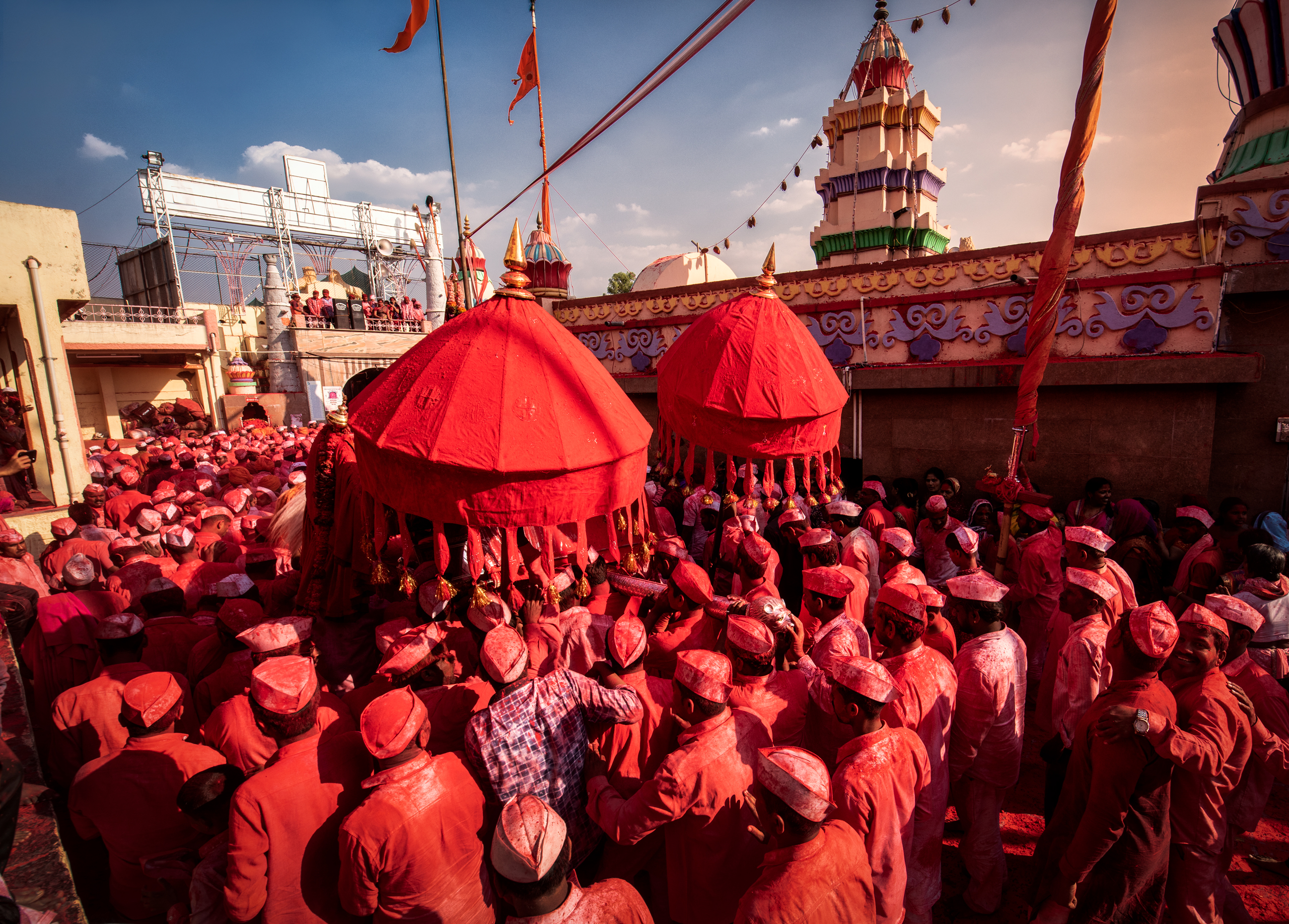
Palkhis carrying the deity’s idol arrive from different places, accompanied by devotees, saffron flags, and decorated bullock carts. The sound of traditional instruments and devotional chanting adds to the atmosphere as the groups make their way towards the temple.
The palkhi procession is an important visual and cultural element of the Yatra. It brings together people who have travelled to participate in a shared religious tradition.
Saffron flags carried on long poles rise above the crowds, creating distinctive patterns against the sky. The decorated carts and groups moving together also reflect the traditional character of the celebration.
For photographers, the processions offer a variety of compositions. A wide-angle photograph can show the scale of the gathering, while a closer frame can capture a devotee carrying a flag or the details of a decorated palkhi.
Red Gulal and Devotional Energy
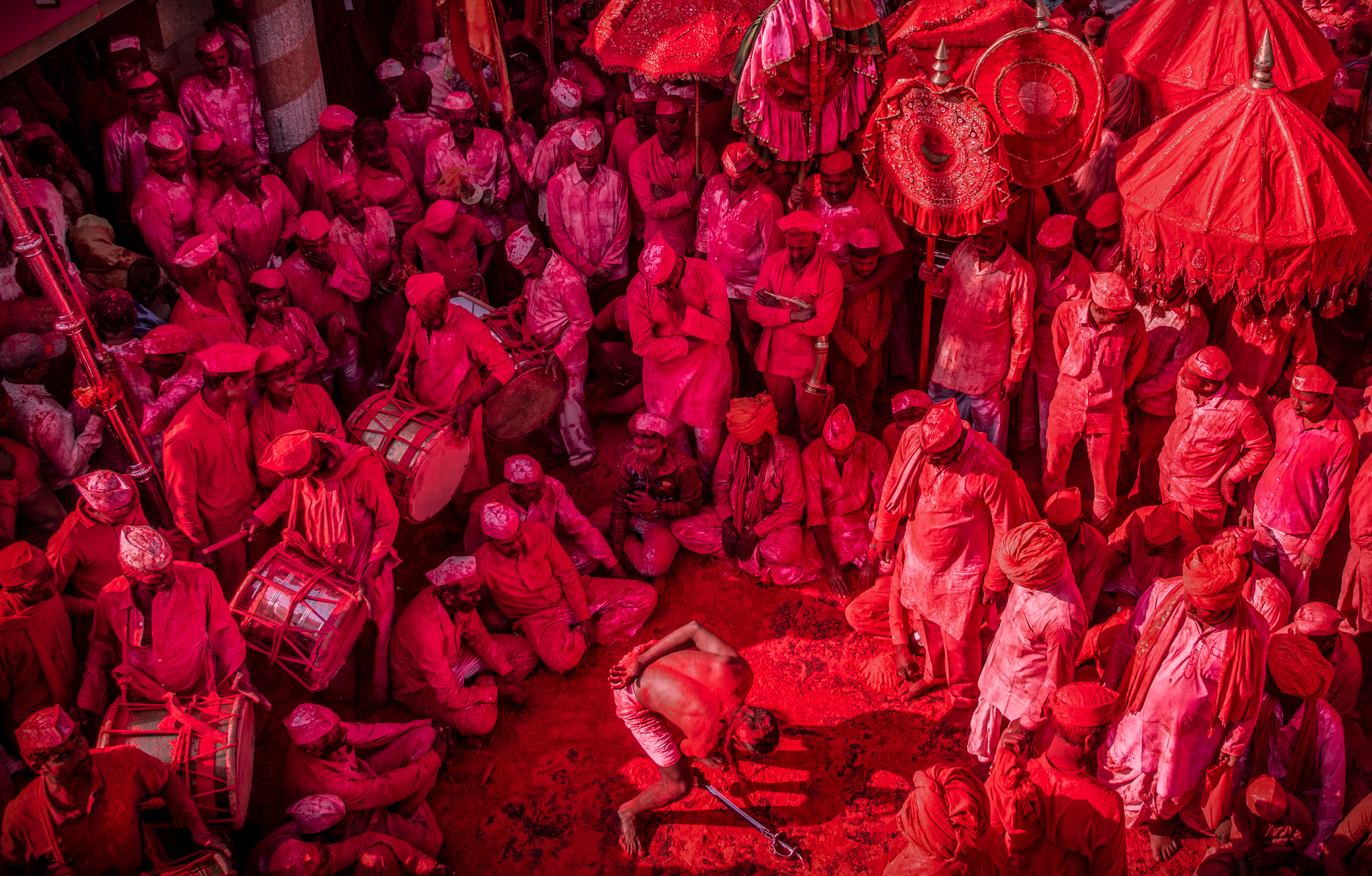
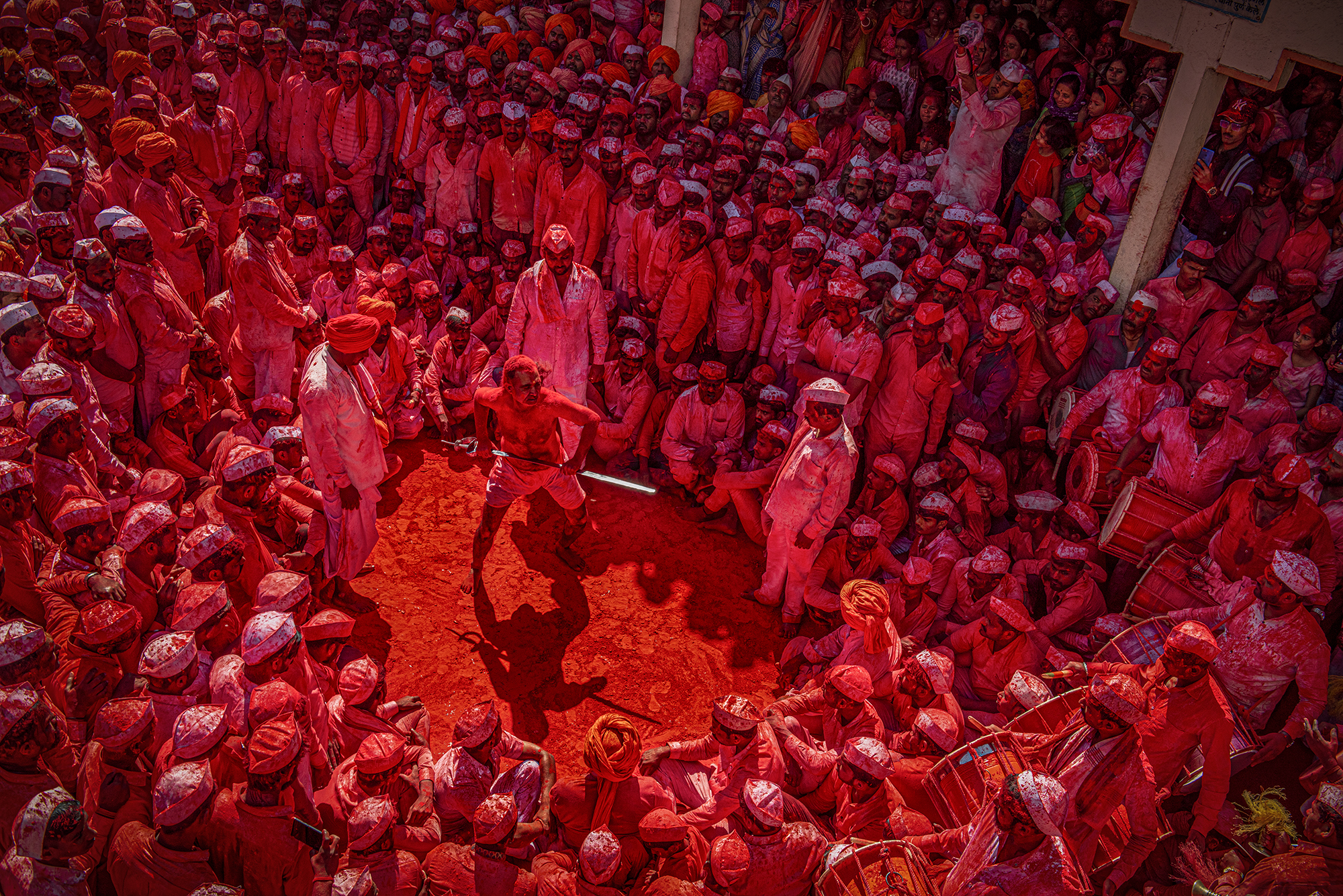
Red gulal is one of the most recognisable features of the festival. Devotees throw the coloured powder into the air, and the temple surroundings can become covered in shades of red.
The official tour page describes devotional chanting and red gulal as prominent elements of the celebration.The colour creates dramatic photographic scenes, especially when sunlight catches the powder as it rises above the crowd. Yet the significance of this moment goes beyond its visual appeal. It forms part of the religious atmosphere and the way devotees express their faith.
Visitors should observe the ritual with sensitivity and avoid treating worshippers merely as subjects for dramatic photographs.
Chabina Dance and Traditional Prophecy
Another notable ritual described on the official tour page is the Chabina dance, performed by spiritual leaders from the community with a holy sword. The event is associated with pronouncements about the coming year’s climate and agricultural prospects. This ritual reflects the connection between community beliefs and the agricultural rhythms that have long influenced rural life. Weather and harvest conditions are important concerns for farming communities, and the ceremony carries cultural meaning for those who participate in it.
The movement of the performers, the attention of the audience, and the atmosphere surrounding the ritual provide opportunities for documentary photography. Photographers should remain at a safe distance and follow any instructions given by organisers or temple authorities.
Traditional Music, Clothing, and Local Culture
Music is an essential part of the Shreenath Veer Mhaskoba Yatra. The tutari, a traditional regional bugle, accompanies the processions and contributes to the distinctive sound of the celebration.
The sounds of instruments, devotional chants, footsteps, and the movement of crowds combine to create an atmosphere that is both energetic and deeply connected to the festival’s religious purpose.
Saffron flags, traditional clothing, and decorated bullock carts add to the visual identity of the event. These details provide photographers with opportunities to document local customs without focusing only on the largest crowds or most dramatic rituals.
Small moments can be just as meaningful as the main procession. A devotee preparing a flag, a family walking towards the temple, or a musician concentrating on an instrument can reveal the personal side of the celebration.
Observing these details helps create a balanced visual story of the Yatra and the people who make it meaningful.
Shreenath Veer Mhaskoba
Explore the Shreenath Veer Mhaskoba Photo Tour
For photography enthusiasts interested in documenting this traditional celebration, the SHREENATH VEER MHASKOBA photo tour offers a photography-focused experience in Veer village.
The official tour information describes guidance on camera settings, lens selection, composition, photography locations, image reviews, and post-processing. These activities can help participants understand how to approach a busy festival and develop a stronger visual story.
The experience is designed for photography enthusiasts, including beginners who want to learn while exploring local culture. A guided photo tour can also help photographers pay closer attention to light, movement, and the details that make each scene meaningful.
For more information about the festival and its traditions, read the VEER MHASKOBA article, which explores the cultural setting and visual highlights of the celebration.
Photography Opportunities During the Shreenath Veer Mhaskoba Yatra
For travel and documentary photographers, the Yatra offers a wide range of subjects. The combination of movement, colour, traditional music, and human emotion makes it an opportunity to practise visual storytelling.
1. Capture the Palkhi Processions
Palkhi processions offer opportunities to photograph movement and collective participation. Try capturing the procession as a whole before focusing on individual details, such as flags, decorations, or the expressions of devotees.
Choose a position that gives you a clear view without blocking the route.
2. Photograph the Colours of Red Gulal
Red gulal creates strong visual contrast against clothing, flags, and the surrounding environment. Look for moments when the powder rises into the air and catches the light.
Protect your camera and lenses from powder and dust. Use suitable equipment protection and avoid changing lenses in crowded or dusty areas.
3. Document Traditional Music and Rituals
The tutari and the Chabina dance are important parts of the festival experience. Anticipate the movement of performers and prepare your camera settings before the moment unfolds.
Photographs of musicians, performers, and attentive devotees can help communicate the atmosphere of the event.
4. Focus on People and Everyday Moments
A meaningful photo story should include more than colourful processions. Look for moments of prayer, family interactions, preparation, and quiet observation.
When making portraits, ask permission whenever appropriate. This encourages respectful interaction and helps people feel comfortable.
5. Create a Complete Festival Photo Story
Start with establishing photographs of Veer village and its surroundings. Continue with images of the temple, arriving processions, traditional music, rituals, and individual devotees. Finish with quieter moments that show the human side of the gathering.
You can explore more travel and cultural photography in the Arun Saha Photography portfolio.

Red Gulal Shreenath Veer Mhaskoba Yatra
Shreenath Veer Mhaskoba Photo Tour with Arun Saha Photography
For photographers who want to explore the festival with guidance, the Shreenath Veer Mhaskoba Photo Tour offers a photography-focused experience in Veer.
The official tour page describes a guided programme that includes on-field photography assistance, advice on lens selection and camera settings, composition guidance, photograph reviews, and post-processing support. It is designed for photography enthusiasts, including beginners who want to improve their skills while documenting a traditional cultural event.
A guided photography experience can help participants approach a busy festival with a clearer plan. Instead of focusing only on individual photographs, they can learn to anticipate important moments, work with changing light, select suitable viewpoints, and develop a consistent visual story.
For more information about the photographer and his approach to cultural storytelling, visit About Arun Saha or explore the Arun Saha Photography website.
Conclusion: Experience Maharashtra’s Living Rural Traditions
The Shreenath Veer Mhaskoba Yatra offers a meaningful glimpse into Maharashtra’s rural cultural heritage. Through its palkhi processions, saffron flags, red gulal, traditional music, and devotional rituals, the festival brings communities together in a shared expression of faith.
For photographers, the experience offers an opportunity to document more than colour and movement. It encourages a closer look at the people, traditions, and relationships that give the celebration its meaning.
If you enjoy travel photography, cultural exploration, and documentary storytelling, discover more through Arun Saha Photography and visit the Shreenath Veer Mhaskoba Photo Tour page to explore the current tour details.
Veer Yatra