

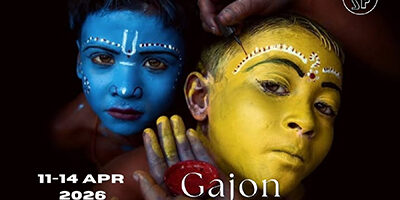

GAJON : The Cultural Heritage Festival of Rural Bengal
An Photo Tour workshop by ASP
MENTOR
ARUN SAHA
(Winner of 8th National Photography Award)
Dates :
Arrival: 11 Apr 2026 Afternoon
Departure: 14 Apr 2026 Afternoon
Nearest Airport: Kolkata
Nearest Railway Station: Howrah, Sealdah, Kolkata
TOUR COST AND TERMS:
COST OF THE TOUR :
950$(Double occupancy)/1200$(Single occupancy) for Non-Indian(foreigner/NRI) participants.
Advance: US$500 While Booking
Final Pay: Will be notified
Overview
In essence, the Gajan Festival is one of the most vibrant and intense folk religious celebrations of Kolkata and rural Bengal, primarily dedicated to Lord Shiva. Celebrated during the last days of the Bengali month of Chaitra (March–April), the festival marks the end of the Bengali calendar year and is closely associated with the agricultural life of rural communities. In many villages across Bengal, Gajan is observed with great devotion, rituals, and dramatic public performances that reflect both spiritual faith and cultural heritage.
The word Gajan is believed to have originated from “Garjan,” meaning a loud roar or cry in praise of Shiva. During the festival, devotees known as bhaktas or sannyasis take vows of austerity and discipline. They fast, practice celibacy, and perform acts of self-mortification as an expression of devotion. These acts symbolize sacrifice, endurance, and the belief that such devotion will bring blessings, prosperity, and a good harvest for the community.
One of the most dramatic aspects of the festival is Charak Puja, which is closely linked with Gajan. During this ritual, devotees are sometimes tied with hooks through the skin of their backs and swung around a tall pole called the Charak tree. This act is performed as an offering to Shiva and is believed to purify the devotees and fulfill their wishes. Although modern regulations have reduced the intensity of such rituals in cities like Kolkata, the symbolic performances and traditional processions still remain an important part of the celebration.
In rural Bengal, the festival has a strong communal character. Villagers organize colorful processions, folk dances, devotional songs, and theatrical performances. Participants often paint their bodies with ash and dress in bright red or saffron garments to represent ascetic followers of Shiva. Temporary fairs, local markets, and cultural gatherings also take place during this period, making Gajan both a religious observance and a social event.
Beyond its religious significance, the Gajan Festival reflects the deep connection between spirituality and agriculture in Bengal’s rural life. The rituals symbolize prayers for rainfall, fertility of the land, and the overall well-being of the community in the coming year. Today, despite modernization and urban influence, Gajan continues to survive as a powerful expression of Bengal’s folk culture, devotion, and collective identity, linking the traditions of villages with the cultural life of Kolkata.

The Ritual of Facepainting
TOUR SYNOPSYS:
PORTRAIT, PEOPLE, FESTIVAL, CULTURE, HERITAGE, STREET & HUMANITY
ITINERARY : (04 Days and 03 Nights)
11 Apr 2026: Early in the morning, we will leave for Sonpalashi to cover the face painting and Gajan.
One of the most striking features of the festival is the traditional face and body painting of the performers and devotees. Participants paint their faces with bright natural colors such as red, yellow, black, and white, transforming themselves into symbolic characters like Lord Shiva, Goddess Kali, ghosts, demons, and mythological figures. These artistic expressions are not merely decorative; they represent spiritual transformation and the temporary embodiment of divine or supernatural beings.
During the festival, devotees known as “sannyasis” or “bhaktas” perform ritual dances, processions, and acts of penance to please Lord Shiva. The painted faces, dramatic costumes, and energetic performances create a powerful visual spectacle that blends devotion with folk theatre. The use of exaggerated facial designs, bold patterns, and expressive eyes helps communicate emotions, myths, and spiritual themes to the audience. In the evening, we will head back to Kolkata and stay overnight.
12-13 Apr 2026: In the morning we will leave for Bagnan where the Gajan rituals occurs in a different note. A remarkable feature of the Bagnan Gajon is the dramatic performances and symbolic acts of devotion, where participants sometimes paint their bodies, wear traditional costumes, and portray mythological characters. These performances often represent themes of sacrifice, devotion, and the victory of divine power.
From Bagnan, we will move to Kandi where the event happens overnight. The Gajon festival of Kandi in the Murshidabad district of West Bengal includes a rare and intense ritual where human skulls of the dead are displayed or carried by devotees. This practice is deeply connected with the Tantric and ascetic traditions associated with Lord Shiva, who is often linked with cremation grounds and symbols of death.During the ritual, selected Gajon sannyasis carry or display the skulls during processions and devotional performances. The skull represents the impermanence of human life and reminds devotees of the cycle of birth, death, and rebirth. It also reflects the belief that Lord Shiva transcends life and death and protects his devotees from worldly fears.
13 Apr 2026:Today, in the morning, after taking some much needed rest in the nearby hotel, we will move to Barampur to witness the most interesting part of the Gajan Festival, the most intense moment is the Charak hook-swinging ritual. A tall wooden pole known as the Charak tree is erected, and selected devotees (Charak sannyasis) have metal hooks inserted through the skin of their backs. Ropes attached to these hooks lift them into the air, and they are swung or rotated around the pole while crowds chant and drums beat. This act of endurance is believed to be a form of penance and devotion to Lord Shiva, symbolizing sacrifice and the hope for protection, prosperity, and a good harvest in the coming year. We will head back to Kolkata after the event gets over in the evening. We will stay over night in a hotel in Kolkata.
14 Apr 2026: Today, in the afternoon, we will check out and shoot in the heart of Kolkata, the rituals of Dandi and Dhuno Poda.
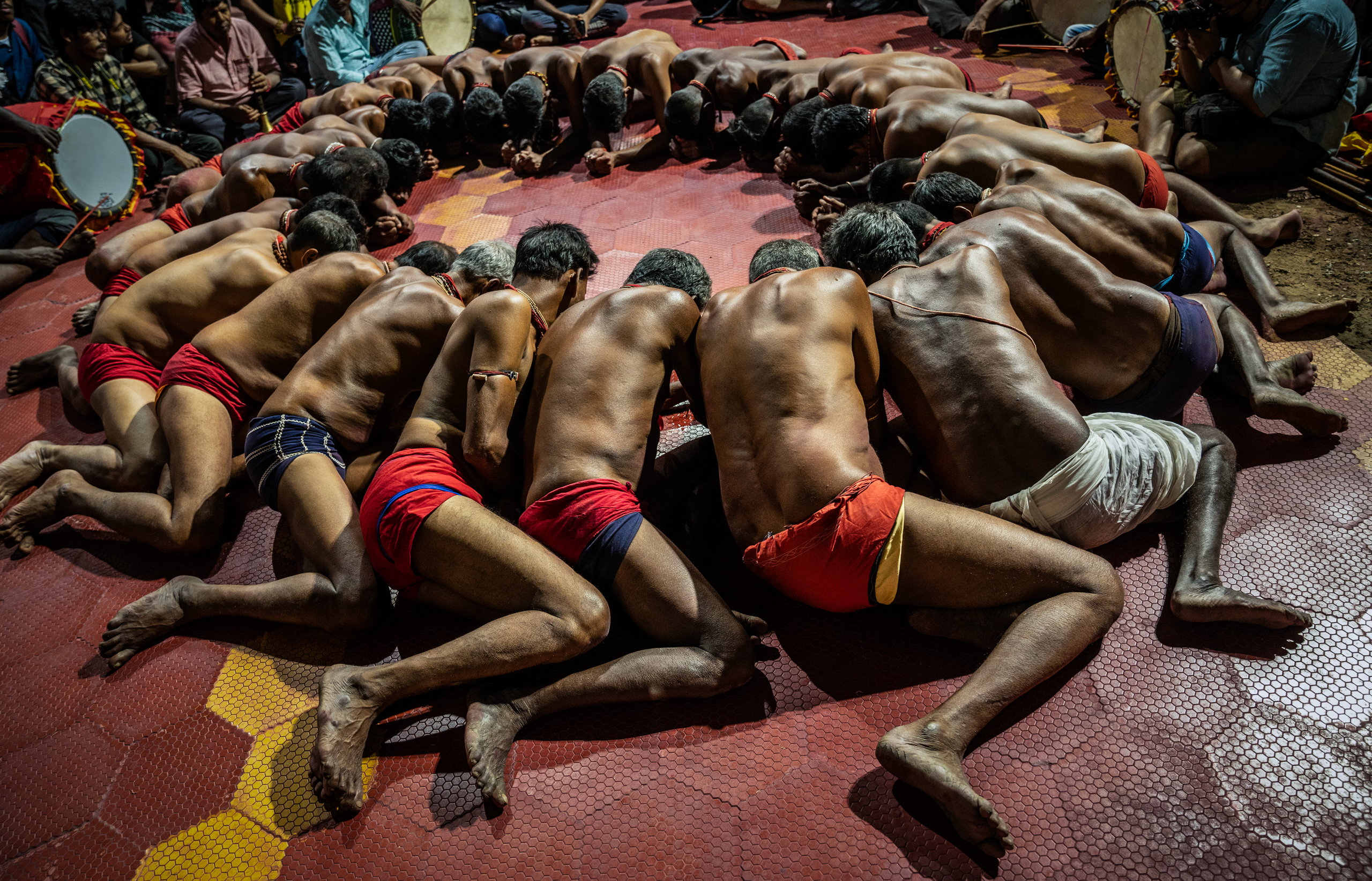
The Dandi ritual is an act of deep devotion and penance. In this practice, devotees known as Gajon sannyasis move forward by repeatedly lying flat on the ground in a full-body prostration and then standing up to mark the next step. This continues along temple paths or village roads until they reach the shrine of Lord Shiva. The ritual symbolizes humility, sacrifice, and complete surrender to the deity.
The Dhuno Poda ritual involves burning dhuno (frankincense or aromatic resin) in earthen pots filled with hot charcoal. Devotees carry these smoking pots on their heads, hands, or sometimes on their bodies while offering prayers to Lord Shiva. The rising fragrant smoke is believed to purify the surroundings and symbolize spiritual cleansing and devotion.
Our photo tour of the Gajon Festival gets concluded here after a get together for one final time over a cup of high tea.

CANCELLATION AND REFUND POLICY
If you cancel your registration, then you will be charged according to the following schedule, based on the full fee of the Workshop:
Before 60 days or more: 25%
Between 45-60 : 50%
Between 30-60 days: 75%
Less than 30 days : Non –refundable
Fee Includes :
-
- Shared double AC bedroom (same gender participants) in a 3 star hotel in central Kolkata. For a separate room extra charge is applicable.
- It will cover your main meals (breakfast, lunch, tea and dinner), starting from 04 Oct dinner lto 10 Oct breakfast.
- Mineral water will be provided
- Tea/Coffee will be provided with breakfast and in the evening.
- All local transports related to our tour
- Mentor’s fee for photography tour, on-field photography assistances and image reviews
Fee Doesn’t Include :
-
- Train/flight tickets to and from your place.
- Travel charges for airport/Railway Station/Bus stand pickup and drop.
- Any additional food items or beverages during meals.
- Any personal habit, medication or expenses.
- Anything that not in “Included” list.


What do I get from this photo tour?
-
-
- A thoroughly guided photographic experience by an expert in the field who knows the places and events very well.
- Slide show presentation of photographs and information of locations and events before each day’s shoot.
- Guiding all participants about lens requirements, creative composition and camera settings on the field during photo shoot.
- Everyday review of participants’ photographs.
- Assisting in possible editing guidance.
- Guiding participants in finding photographic locations and vantage points for places and events.
- Helping in finding the local delicacies.
-

Am I eligible for this tour?
Anyone above 18 years (unless accompanied by a parent or guardian) is welcome to join this photo tour.I am new to photography. Will I join this trip? Yes of course. This tour is for all photography enthusiasts. The more you travel and explore, the more your photographic eye will open. Moreover, our team leaders will ensure to give special attention to the beginners. What equipment is required for this Trip? Well, even the point-and-shoot camera will work fine. If you have a DSLR camera, any zoom lens and a wide-angle lens will work, but preferably a full-frame camera with a faster wide-angle lens will serve best. A laptop with post-processing software, an extension charging board, an external hard drive, and extra memory cards will be helpful.
What is the difference between ASP Photo Tour and other tours?
We are not offering a package tour for general tourists; it is specifically meant for photography enthusiastic people and designed by experienced professional photographers. You will discover the place and learn a lot about this ancient city, its local people and their culture which is an important part of our travel photography. We will try to observe the local people, their daily activities and cultural beliefs and will try to capture those moments using the right compositions and techniques. Our Team Leaders will help our guests to learn camera settings, framing and as well as post-processing. If that’s what is your requirements then surely join us for this exciting photo tour with ASP.
#Under any unavoidable circumstances, if we have to cancel our photo tour, your entire booking money will be refunded.
DISCLAIMER
-
-
- We don’t have any control over weather conditions, pandemics, accidents or any medical emergencies. Under any unforeseen conditions, we may have to change our schedule. We expect your cooperation under such circumstances.
- The tour itinerary is tentative. Change or cancellation of programs may happen for any unpredictable/for a better option reason.
- Hotel facilities may not be of very high standard when we will be shooting in the villages, though we will try to find the best possible facilities.
-
For more Details :
Contact(call or WhatsApp) #(091) 8605013985
Or mail us at arunsahaphotography@gmail.com

Picture Credits: Subhajit Mukherjee, Debdatta Chakraborty & Arun Saha